
The story behind our scent collection
A little nature. A little enchantment.
Explore the gardens, woodland paths, and warm hearths behind Emberglass, with a thoughtful guide to scent stories, ingredients, and everyday rituals.
By Emberglass Apothecary · Updated · 5 min read
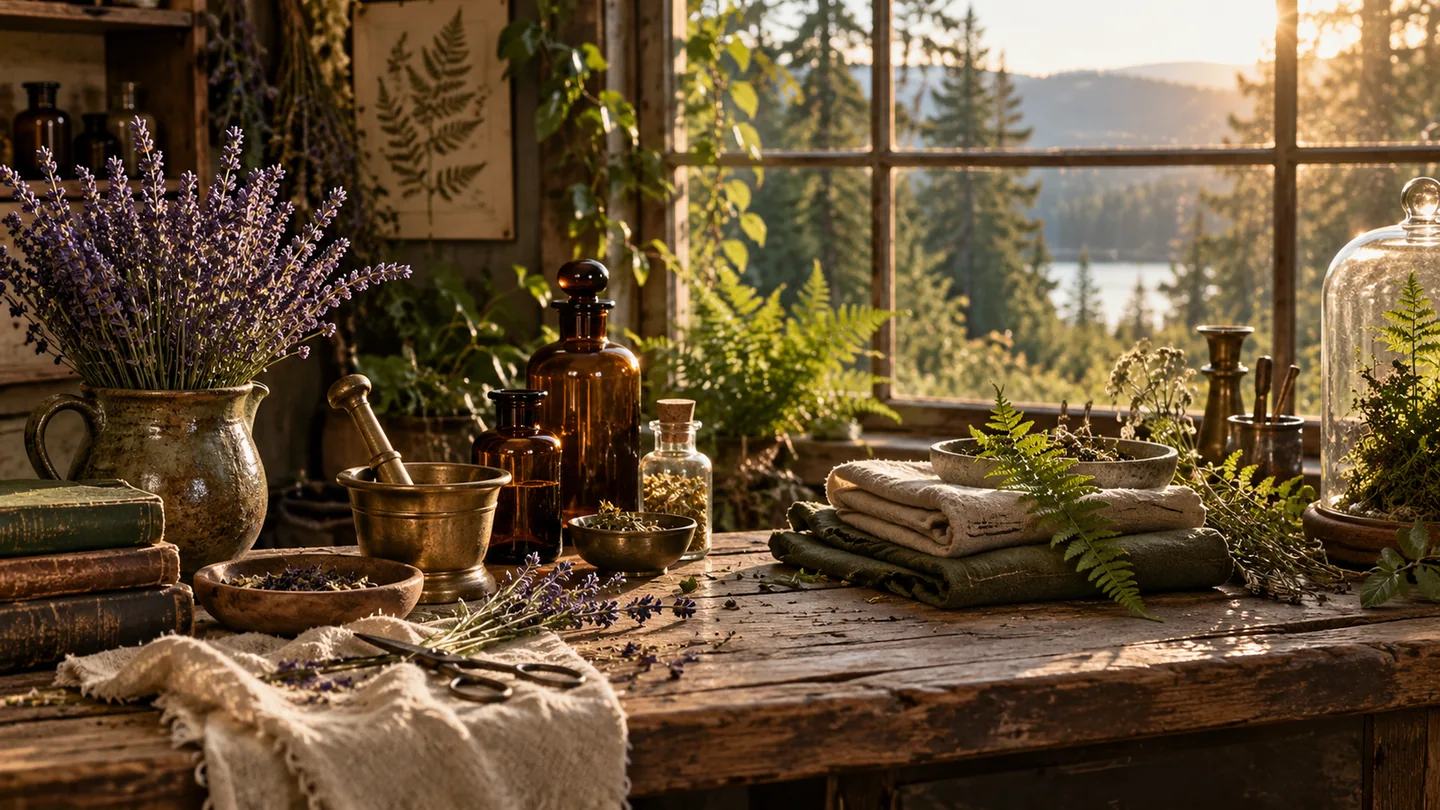
The small moments that make a home
Everyday routines deserve a little wonder. A sink beside a sunlit window, a folded towel, a favorite soap waiting on its dish: these are small details, but they are details we meet again and again. Emberglass Apothecary begins with that ordinary setting. Our collection invites you to choose something you enjoy using and give it a considered place in your day.
The phrase “A little nature. A little enchantment.” describes our creative approach. Gardens, woodland paths, and warm hearths give us a language for color, fragrance, and atmosphere. The enchantment is imaginative: a name that brings a scene to mind, an appealing botanical detail, or the pleasure of finding a scent that feels like yours. You do not need an elaborate routine to participate.
A garden, a woodland path, a warm hearth
Think of the collection as a set of places you might like to visit. The garden is floral and leafy, with lavender as one familiar starting point. The woodland is earthier: moss, wood, and green impressions can suggest a shaded path after rain. The hearth is warmer, bringing to mind oats, sweet notes, apples, and spice. These are creative groupings for browsing, rather than rigid classifications or promises about how everyone will perceive a fragrance.
Moonveil carries lavender fragrance, making it a useful starting point for someone drawn to a floral description. Golden Hearth brings together oatmeal, milk, and honey notes. Obsidian Ember offers oakmoss and aloe fragrance notes in a charcoal bar. Read the selected soap’s current details for the actual formula; a scene described in a name does not tell you everything that is in the bar.
You may like more than one of these worlds. A floral bar can suit one sink while a warm scent belongs at another. Or you may prefer to keep a single favorite in use and leave the rest of the collection for later. There is no requirement to collect every scent or change with the season.
What a scent story can tell you
A fragrance description is most useful when it helps you imagine a direction. “Lavender” gives you a different starting point from “lemon,” while “apple and spice” suggests a warmer combination. Start with those specific words before deciding whether a poetic name appeals to you. If a name and a fragrance description seem to point in different directions, let the concrete description lead.
It also helps to separate an aroma from a formulation. A lavender fragrance is not, by itself, proof that a bar contains lavender essential oil. A honey-like scent does not establish the quantity of honey in a product. Decorative plants in an illustration are styling choices, not an ingredient declaration. The product page and the label are the places to check the selected option’s ingredients.
FDA explains that cosmetic fragrance blends can appear on ingredient lists under the collective term “fragrance.” If you need to avoid a particular substance and the published details do not answer your question, ask before ordering. A poetic description should never have to carry the responsibility of an ingredient list. [1]

Make a ritual practical enough to repeat
Begin with the setting you actually have. Give the soap a dish that drains, put a clean towel within reach, and keep the counter simple enough to wipe down easily. Those choices make the space pleasant while helping it function. An attractive arrangement should still leave room for handwashing and keep the bar out of a puddle.
Next, choose one detail you notice. It might be the fragrance as you work up a lather, the texture of a linen towel, or the appearance of a green dish against a pale basin. Let that be enough. A daily ritual can be brief and ordinary; it does not have to become another task you must perform perfectly.
For handwashing, the practical work still matters. CDC says plain bar and liquid soap both work well, and recommends scrubbing for at least 20 seconds. Enjoying a scent does not replace thorough washing, rinsing, and drying. Our language about atmosphere is an invitation to enjoy the moment, not a claim that a fragrance improves hygiene. [2], [4]
Botanical inspiration, with clear expectations
We use nature as a creative reference, but “natural” is not a shortcut for deciding whether a product suits your skin. FDA cautions that plant-derived ingredients are not automatically safe for everyone. Individual sensitivities still matter. Check fragrance, milk, oils, and the other listed ingredients before choosing, especially when you already know something you need to avoid. [3]
The same care applies to language about mood. You may associate lavender with your garden or warm spice with a favorite kitchen. Those personal associations are welcome, but this collection does not promise to treat anxiety, improve sleep, or address a skin condition. The useful question is whether you enjoy the product and whether its ingredients and intended use fit your needs.
If fragrance is a known concern, start with that concern rather than a scent family. Our scent-selection guide explains why an “unscented” name alone is not enough to establish that a product meets an individual fragrance restriction. Contact us for missing product information instead of trying to infer it from a photograph.
Share the story thoughtfully
Soap can make a personal gift when the choice begins with the recipient. Think about scents they already use, whether they avoid fragrance, and whether they have mentioned an ingredient restriction. A beautiful presentation cannot answer those questions for them. When you are unsure, ask a simple preference question before choosing.
Include the original product information with the gift. A small note about why you chose a lavender or woodland-inspired scent can add warmth, while the label supplies the practical details. Keep decorative loose botanicals outside the soap’s packaging, and make it clear that soap is for external cleansing use. A reusable dish or pouch can be a useful companion when its care instructions are included.
Finally, let the recipient decide how the story fits into their home. Your woodland favorite may remind them of something entirely different. That is part of the appeal of fragrance: the description starts the conversation, and personal preference finishes it. Explore the collection at your own pace, read the selected details, and choose a little everyday wonder that belongs to you.
Sources & further reading
Reviewed October 12, 2026. External sources support the general information cited above. Practical arrangements and creative scent groupings are Emberglass editorial suggestions, not product-specific study findings.
General information and inspiration, not individualized medical advice. Manage blog email notifications in your account.